
The Danger of Real Estate Influencers
The Dangerous Rise of Social Media Real Estate Influencers in Fragmented Oversight Markets
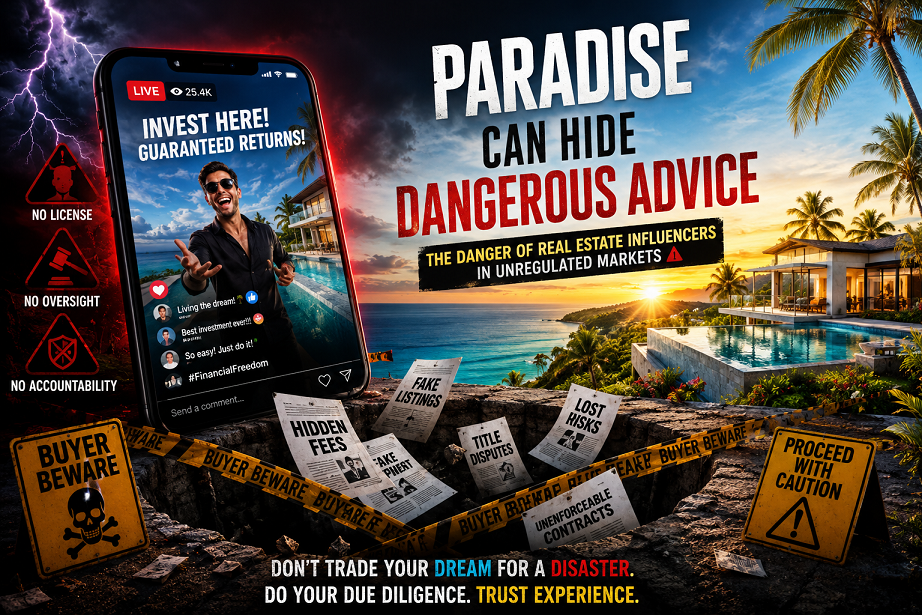
In fragmented or lightly regulated real estate markets, social media has created a dangerous illusion of expertise. The danger of real estate influencers with large followings, polished videos, luxury lifestyles, and aggressive marketing tactics are increasingly positioning themselves as trusted real estate advisors despite lacking licensing, transactional experience, legal knowledge, or professional accountability. For unsuspecting buyers and investors, especially foreigners unfamiliar with local laws and customs, this creates a high-risk environment where entertainment is mistaken for expertise. In markets where oversight is weak, the consequences can be severe: fraudulent listings, inflated prices, poor due diligence, unenforceable contracts, title disputes, and significant financial losses.
The Danger of Real Estate Influencers
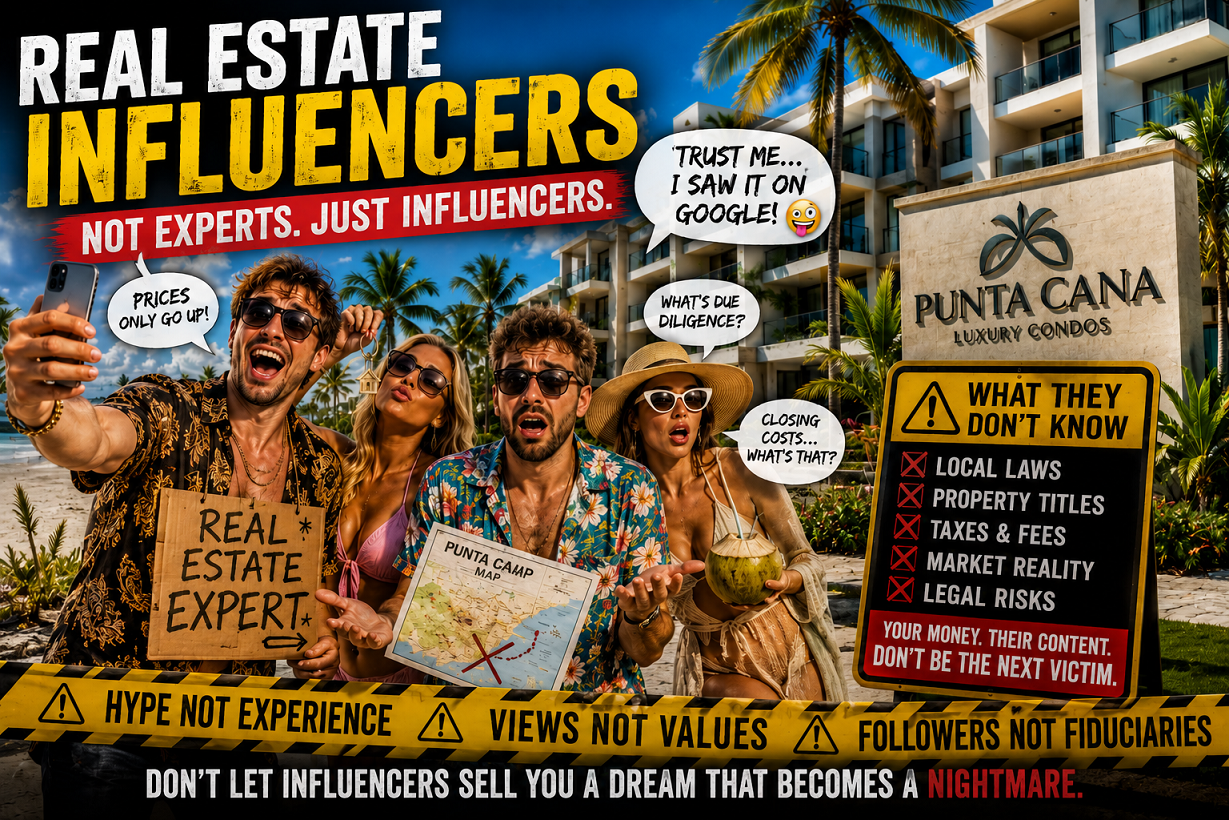
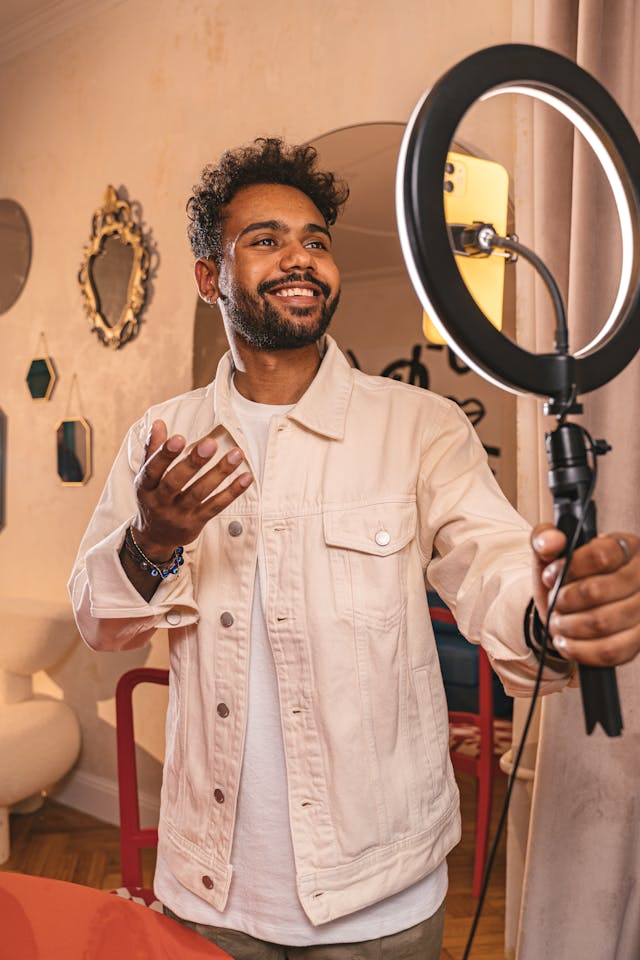
The rise of the “influencer-agent” has blurred the line between marketing and professional real estate representation. Many social media personalities are not trained in property law, zoning regulations, title verification, escrow procedures, tax implications, or investment analysis. Instead, their authority is often built entirely on engagement metrics — followers, views, and viral content. A large audience does not equate to competency, yet many consumers incorrectly assume visibility equals credibility. In fragmented oversight environments, there may be little to no requirement for education, licensing, continuing training, or fiduciary responsibility, allowing virtually anyone with a smartphone and charisma to present themselves as a real estate expert.
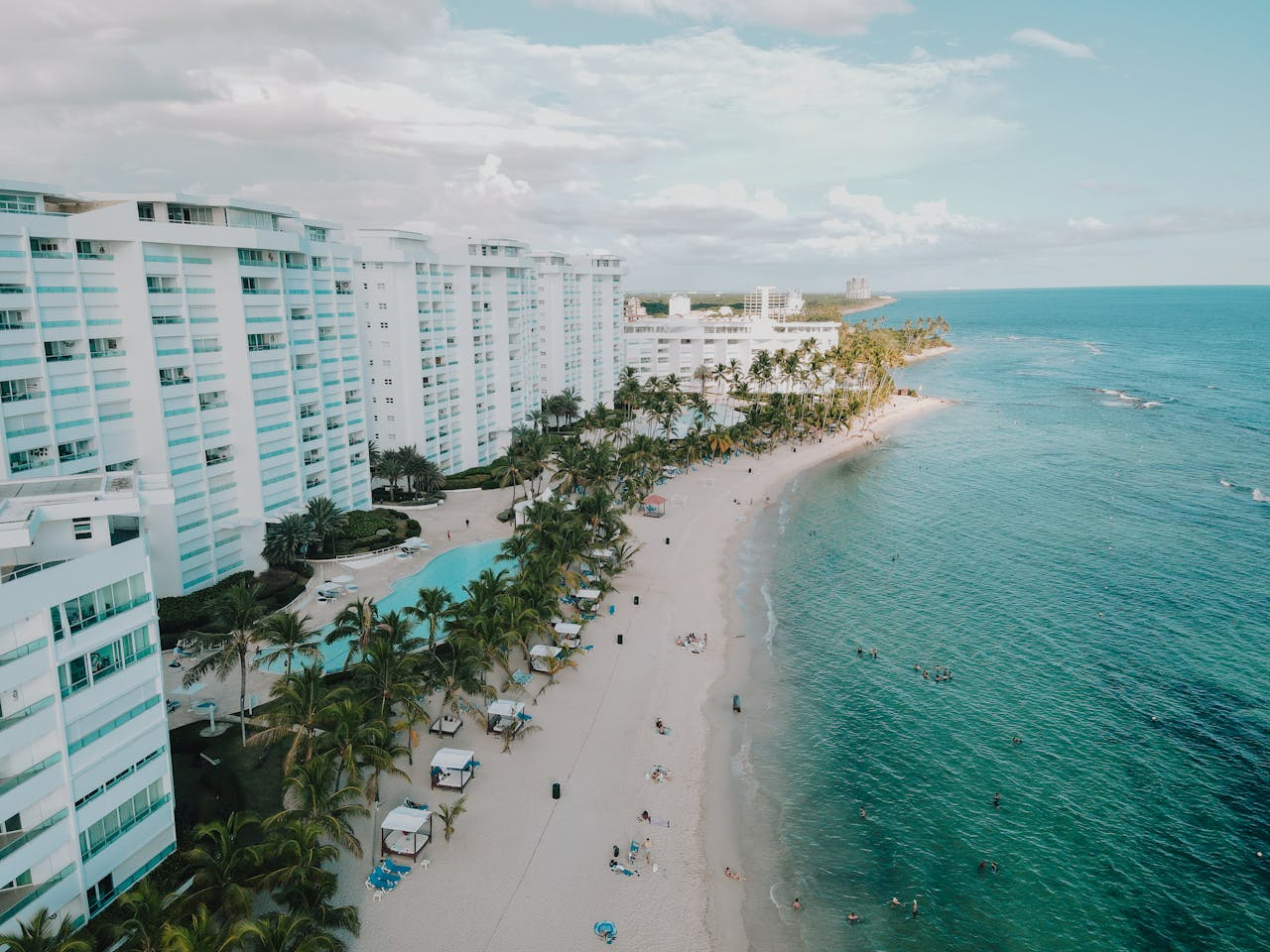
Many of these “influencer agents” can be found in the Dominican Republic and the Riviera Maya.
One of the biggest problems these influencers create is misinformation. Complex real estate transactions are reduced into simplistic “investment hacks” and exaggerated promises designed to maximize clicks rather than protect consumers. Buyers are told that certain markets are “guaranteed” to explode in value, that legal risks are “normal,” or that due diligence is unnecessary because “everyone buys this way.” This type of reckless advice can push inexperienced investors into unstable deals without understanding local legal systems, ownership structures, or hidden liabilities. In many cases, influencers are financially incentivized through referral fees, undisclosed commissions, or direct partnerships with developers, creating conflicts of interest rarely disclosed to their audience.
The only “guarantee” is that if an investor buys a property and puts it in the rental program or on Airbnb/VRBO, is that eventually people will see it on the internet. Many of these “influencer agents” will hint that you will have immediate tenants or immediately begin receiving ROI.
Another major issue is the absence of accountability. Licensed real estate professionals in regulated markets typically operate under ethical guidelines, consumer protection laws, and disciplinary oversight. The danger of real estate influencers operating outside those systems often have no governing body monitoring their conduct. If a deal collapses, a title problem emerges, or a buyer discovers misrepresentation after closing, there may be little recourse available. The influencer can simply move on to the next trend, delete content, or shift responsibility elsewhere. Consumers are left dealing with legal disputes, financial damage, and properties that may not match what was originally advertised online.
The lack of market knowledge is equally concerning. Real estate requires far more than showing attractive properties or posting drone footage on Instagram or TikTok. Understanding comparable sales, infrastructure planning, local economic conditions, ownership history, development risks, and jurisdiction-specific regulations takes years of experience. Many influencer-driven recommendations are based on hype cycles rather than data-driven analysis. The danger of real estate influencers is that they often promote areas they barely understand simply because those markets are trending online or because developers are offering lucrative promotional partnerships. This creates artificial market distortion and unrealistic expectations among buyers.
The Danger of Real Estate Influencers
Foreign investors are particularly vulnerable in these situations. Many rely heavily on social media when researching overseas opportunities, especially in Caribbean and Latin American markets where transparency may already be limited. Influencers frequently capitalize on this by presenting themselves as “local insiders” while bypassing essential legal and financial safeguards. Buyers may unknowingly purchase properties without verified titles, proper permits, infrastructure access, or legitimate ownership documentation. In fragmented oversight markets, where centralized property databases and enforcement mechanisms may already be weak, trusting unqualified influencers can amplify the risks exponentially.
There is also a broader reputational cost to the real estate industry itself. When influencer-led transactions go wrong, consumer trust in the entire market deteriorates. Legitimate brokers, agents, attorneys, and developers are forced to compete against sensationalized content and unrealistic promises. Serious professionals who prioritize compliance, transparency, and due diligence often appear “less exciting” than influencers selling aspirational lifestyles and quick-profit narratives. Over time, this erodes professional standards and encourages a race toward marketing theatrics instead of responsible representation.
Consumers should approach influencer-driven real estate advice with significant caution, (it’s best to stay away from them and not consume their content) particularly in unregulated or fragmented oversight markets. Social media can be a useful discovery tool, but it should never replace professional due diligence. Buyers should independently verify licensing, consult local real estate attorneys, request formal documentation, investigate title histories, and work with experienced professionals who are accountable under recognized standards. A viral video or large follower count cannot protect an investor from legal disputes, fraudulent transactions, or costly mistakes.
Only Hire Agents With A Successful Track Record
In fragmented oversight real estate markets, experience is not just valuable — it is a form of protection. When regulations are inconsistent, enforcement is limited, and transaction standards vary widely, buyers face significantly higher risks than they would in a fully regulated market. Working with a real estate agent who has a proven and successful track record of completed sales helps reduce those risks by providing practical market knowledge, established professional relationships, and transaction experience that cannot be learned from social media or theory alone.
Experienced agents understand how to navigate the complexities that often exist in fragmented markets. They know how to identify red flags in ownership documentation, recognize pricing inconsistencies, verify property histories, and guide buyers through local transaction customs that may not be obvious to foreign or first-time investors. A successful sales history also demonstrates that the agent has been trusted repeatedly by buyers and sellers, which is especially important in markets where formal oversight may not adequately protect consumers.
Another critical advantage is network access. Established agents typically have long-standing relationships with reputable attorneys, surveyors, appraisers, developers, inspectors, and notaries. In fragmented oversight markets, these professional connections can make the difference between a secure transaction and a costly mistake. Buyers are not simply hiring an individual agent — they are gaining access to an entire ecosystem of trusted professionals that helps validate and protect the transaction process.
Agents with real transactional experience are also more likely to provide realistic guidance instead of emotional sales tactics. They understand market cycles, liquidity challenges, resale potential, infrastructure concerns, and neighborhood-specific risks because they have successfully closed deals in those environments before. Inexperienced agents or influencer-style marketers often focus only on lifestyle appeal and hype, while seasoned professionals prioritize due diligence and long-term value protection.
The Danger of Real Estate Influencers
Perhaps most importantly, a proven track record creates accountability. Agents who have built their reputation over years of successful transactions have far more to lose from unethical behavior or poor advice. One danger of real estate influencers is they aren’t held to the same standards as a licensed real estate agent, so their behavior can be questionable or unethical. Their business depends on referrals, repeat clients, and long-term credibility within the market. In loosely regulated environments where legal recourse can sometimes be difficult or expensive, reputation becomes one of the strongest safeguards a buyer can rely on.
The danger of real estate influencers in fragmented oversight markets is REAL and very prevalent. A danger of real estate influencers is that they can cost you a lot of time and money and it’s no sweat off their back, they just move onto the next naive person in their comments section to increase their bottom line. Beware of the danger of real estate influencers and stay far away from them and do not consume their content. There are plenty of naive people that are charmed by the vague language and charisma and are oblivious of the danger of real estate influencers, don’t fall prey to them.
For potential home buyers, especially international investors, choosing an experienced real estate professional is not simply about convenience — it is a critical risk-management decision. In fragmented oversight markets, the right agent can help protect your investment, identify hidden dangers, and guide you through a process that may otherwise expose you to unnecessary legal and financial uncertainty.
In real estate, credibility should be earned through knowledge, transparency, experience, and accountability — not algorithms.
